The Last Pass: Bringing Bob Cousy and Bill Russell's Story to the Stage

Holy Cross staged a reading of The Last Pass, adapted from Gary M. Pomerantz's book on Bob Cousy and Bill Russell, with Cousy in the audience.

By Kaitlyn Richards '29, Chief News Editor, The Spire
September 25, 2026
‍
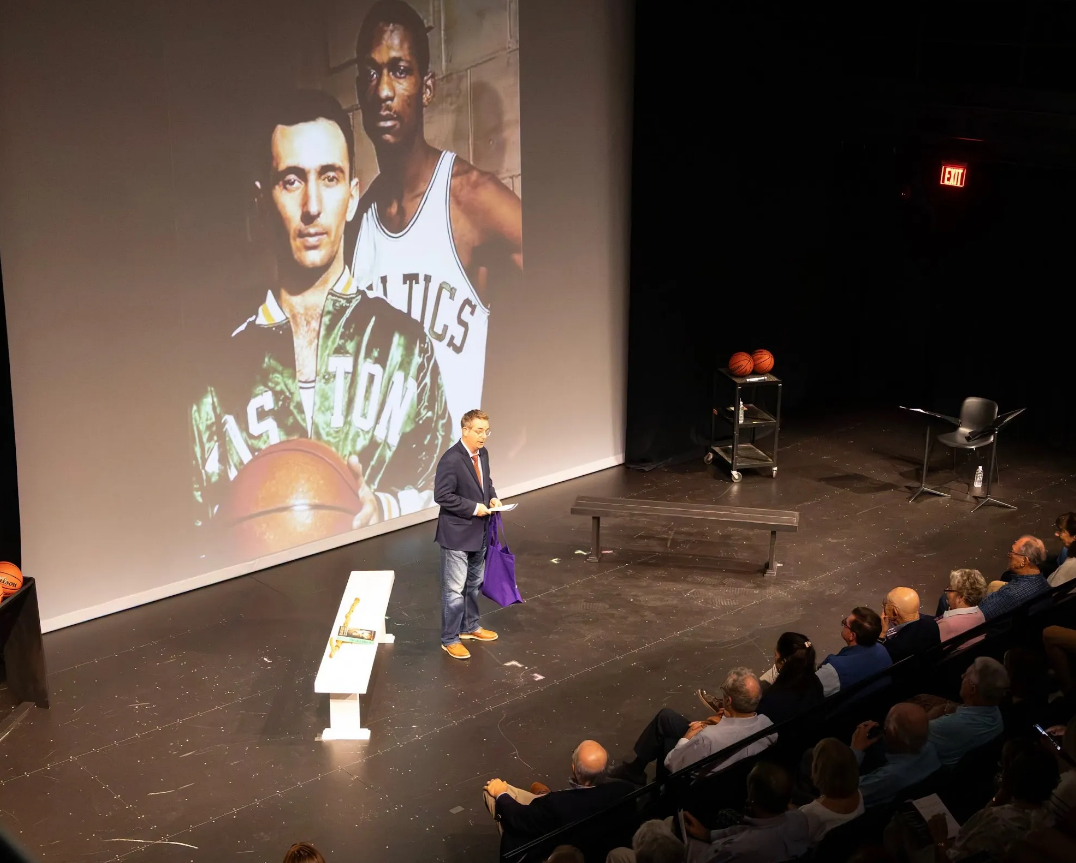
On Friday, September 18, 2026, a packed audience filled the Boroughs Theater at the Prior Performing Arts Center (PAC) for two performances of The Last Pass, a staged reading of Gary Pomerantz’s The New York Times Best Selling book, chronicling the relationship between basketball legends Bob Cousy and Bill Russel during their time together on the Boston Celtics.

Adapted by director Vincent Murphy, the play features two actors, Frank Licato as Bob Cousy and Vincent Ernest Snyder as Bill Russell. The set design, although minimal with only a few basketballs, used innovative projection technology to bring emotion to the performance, transforming the audience into the Celtics fans, or seeing Cousy as a young child. Additionally, the performance incorporated Cousy’s actual cane.

Pomerantz, who wrote the original book, attended the performances and spoke with The Spire about seeing the story being brought to the stage.

“It was otherworldly,” explained Pomerantz following the first performance of his book. “It was something that I never expected to see happen, but it was a joyful experience for me.”


For director Vincent Murphy, adapting Pomerantz’s book meant translating a story that spans years of history and a complex relationship between two teammates into a theatrical format.

When speaking to The Spire, he explained that the production was created in nearly four days, and “it was intense.” He explained that, “The good thing is you set the bar as high as you can, and say to yourself, we could fail, but let’s see if we can get here.”

“So for these actors, and the Danish designer that we had doing the video, this was frightening, but also it kicks in your energy. There is something about having a limited amount of time, and a big agenda, that makes you fearless. To be an artist in any way, you just have to be fearless.”

Pomerantz’s connection to Cousy was central to the production of the staged reading, as to write the book: “I interviewed him fifty-three times, over a two and a half year period, and he was engaged, and engaging. The interviews were emotional, the interviews were authentic, and the interviews became the spine of the book.”

The story not only follows the massive success of the Celtics during the peak of Cousy’s career, but also the racial tensions surrounding the team during the Civil Rights Movement. Through Cousy’s memories, the performance depicts his complex feelings about his relationship with teammate Bill Russell, and his own regret over not doing more to support his teammate during a period of extremely intense racial discrimination.

Those moments gave the performance an emotional weight that extended beyond basketball. Audience members were brought to tears as the relationship between Cousy and Russell unfolded on stage, particularly as Cousy confronted the choices he made during their years together.

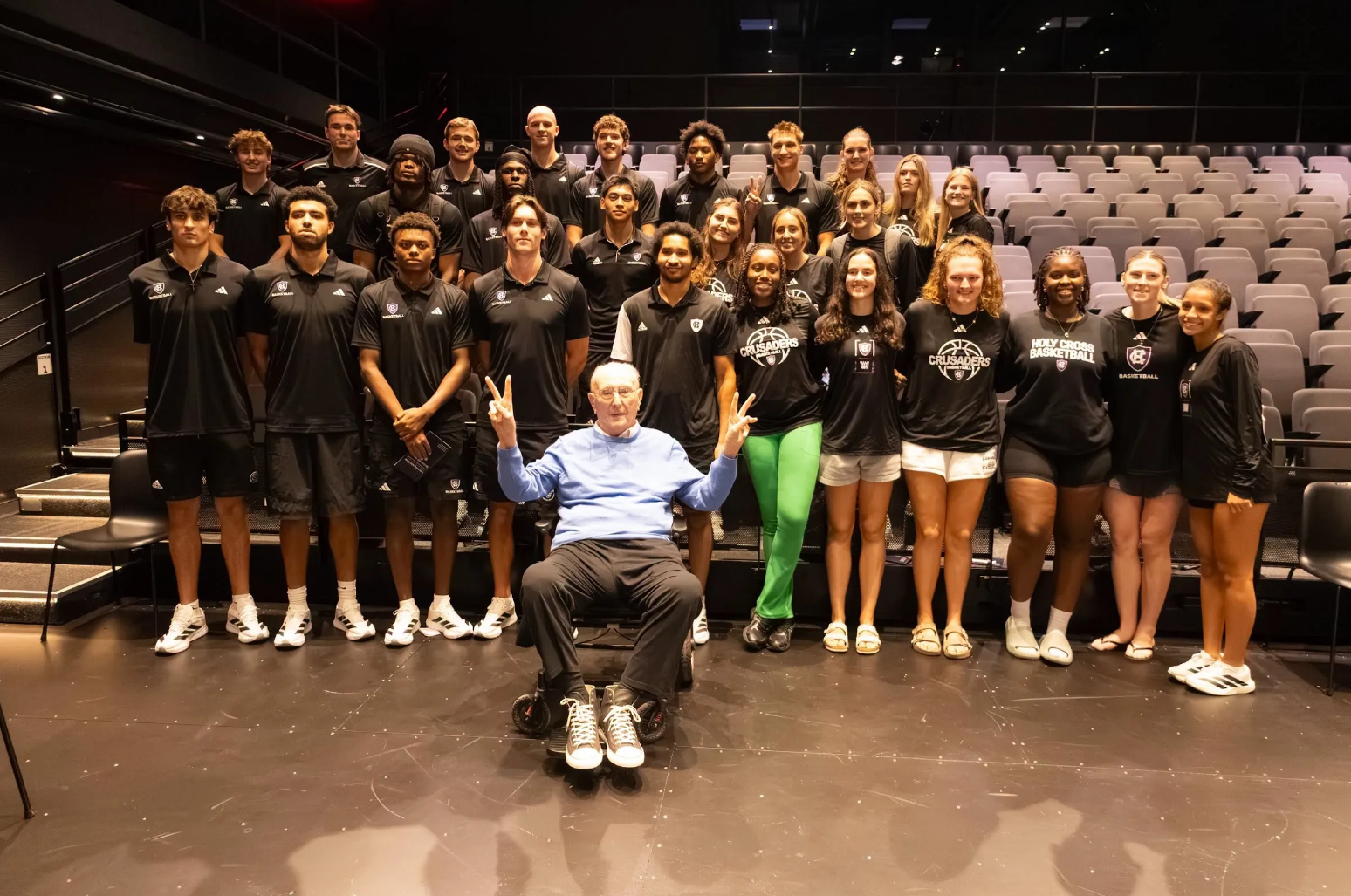
Cousy himself was in attendance at the performance. Following the staged reading, he was approachable by audience members, with nearly all attendees having the opportunity to shake his hand. Members of the men’s and women’s basketball teams were among those who greeted the Celtics legend.

Outside the theater, the PAC Beehive featured a display of Cousy memorabilia provided by the Holy Cross Archives. The exhibit complemented the production by showcasing artifacts connected to Cousy’s career and history at Holy Cross.

‍Copy edited by Lilly Baumfeld ‘27Featured images courtesy of Kaitlyn Richards ’29